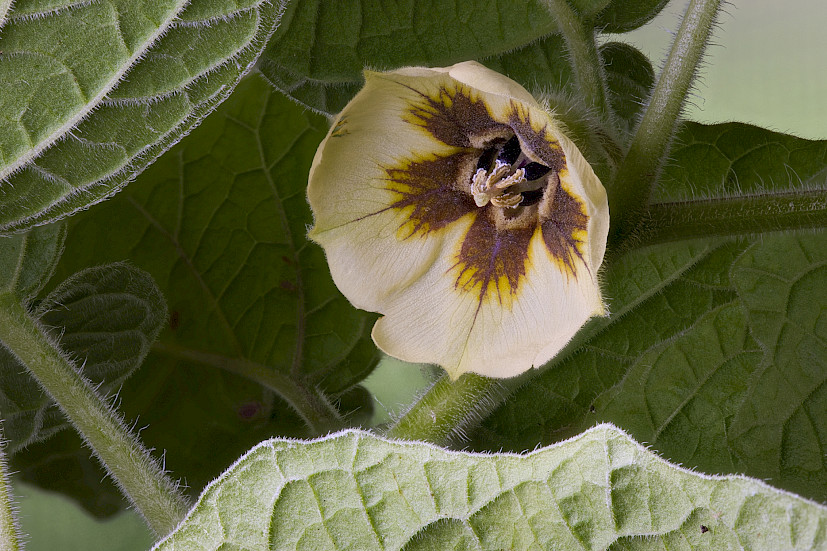
Virginia ground cherry
Physalis virginiana
Physalis virginiana is one of those plants that rewards patience. It doesn’t announce itself loudly, but once you’ve learned its rhythm, you start to notice it everywhere it’s comfortable.
What it is
A perennial member of the nightshade family, it grows low and spreading, with soft, slightly fuzzy leaves and pale yellow flowers marked with darker spots. After flowering, the ovary swells into the plant’s signature feature: a papery, lantern-like husk enclosing the fruit.
How it lives
In Michigan and across much of its range, it favors open, sandy places:
- prairies and prairie remnants
- oak and jack pine savannas
- sandy fields, roadsides, rail corridors
Compared to some other Physalis species, P. virginiana is less weedy in habit. It doesn’t rush to dominate disturbed ground so much as settle into places that already suit it.
Seasonal character
- Early summer: the plant is easy to overlook — green, low, unassuming.
- Mid to late summer: flowers appear, then the inflated husks begin to form.
- Late summer into fall: the lanterns dry and pale, becoming visually distinctive even when much else has faded.
Those husks are often what finally draw the eye — little paper shells catching light near the ground.
Ecological role
The flowers are visited by a range of insects, and the ripe fruits are edible (to people and wildlife alike), though modest in size. The plant fits well into open, sunny systems without overwhelming its neighbors, which is part of why it’s a good citizen in restorations and demonstration plantings.
Why it belongs at the Habitat Discovery Center
Physalis virginiana sits right at the intersection you’ve been working toward:
- native, but not showy
- familiar in name to some, surprising in form to many
- ecologically grounded without being fussy
It’s a plant that invites closer looking — and once noticed, it’s hard not to smile when those small lanterns appear.