
Habitat Discovery Center
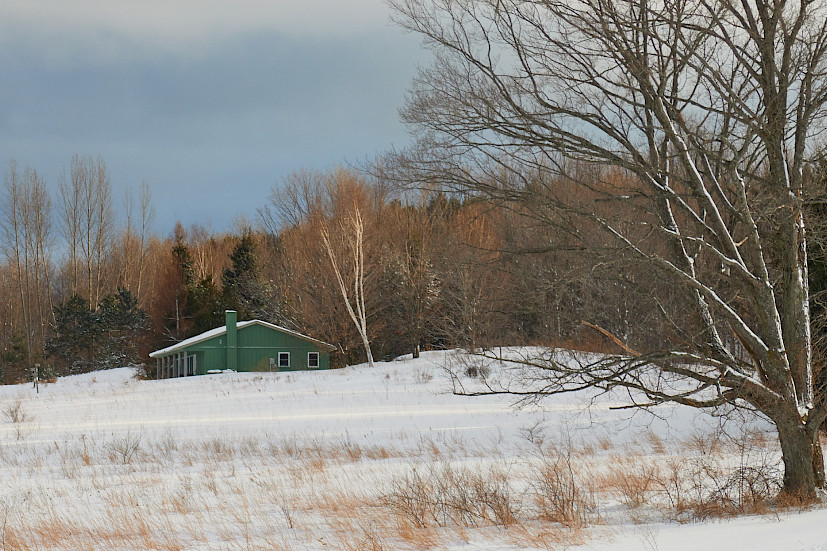
Soon after the founding of Saving Birds Thru Habitat, Kay and Jim Charter deeded three plus acres of Charter Scantuary, their 47-acre private bird sanctuary, to the organization to erect a "birdie home." After the initial "barn-raising" of the new building's framework, Jim Charter headed up a growing group of volunteers to complete the educational center, later dedicated as the Habitat Discovery Center. Soon after that, native trees, shrubs and native flower gardens were installed around the property. The vision was to ultimately have the educational nature center's grounds entirely covered with native plants.
Our Habitat Discovery Center is located in Omena, Michigan, adjacent to the private bird conservation effort, Charter Sanctuary, that has hosted, over the years, more than sixty nesting species and about a hundred additional species that forage for food as they pass through during migration. Resident birds of the region forage for food year round and some choose to nest there.
Many migratory and local resident birds find suitable nesting habitat on both Habitat Discovery grounds and adjacent Charter Sanctuary. Birds who choose to forage or nest in either location, including bluebirds and tree swallows who use nest boxes erected for them at the nature center, do not respect property boundaries and freely fly back and forth in search of nesting resources, water, and food (often seen catching insects on the fly).
Explore the Habitat Discovery Center
- Photos at the Discovery Center
- Plants at the Habitat Discovery Center
- Sleeping Bear Birding Trail
- Habitat Discovery Center Grounds: Observations 2025
“Saving Birds Thru Habitat is forward looking. It educates landowners, children, and the general public about the importance of native plants and the insect biomass they support, and why we must protect and restore critical habitat for our bird species. Saving Birds has proven that installing native plants and winning the war on invasive species is not an insurmountable task. It can be done, and the joy of seeing bird populations thrive as a result of these efforts is inspiring.”
— Glen Chown
Executive Director, Grand Traverse Regional Conservancy